
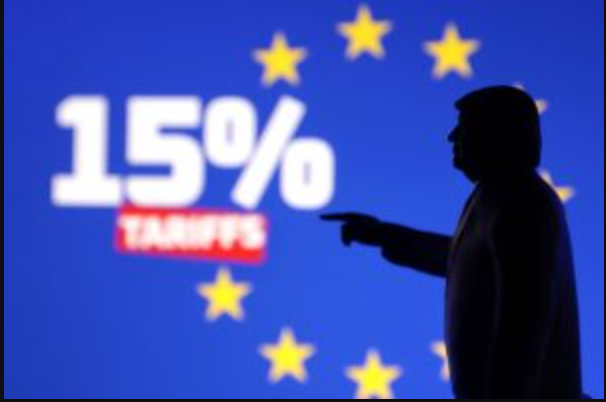
In early 2026, the United States announced a new round of import tariffs from several European countries, a measure that has retented transatlantic trade relations. New charges include an initial tariff of 10%, with the possibility to rise up to 25% from June 2026 without a political and trade agreement between the two parties.
The decision is part of a broader trade strategy linked to geopolitical and security disputes, and has generated a strong reaction in both financial markets and European governments.
Which European countries are affected
Among the countries directly identified by these measures are Denmark, Norway, Sweden, France, Germany, Netherlands, Finland, United Kingdomall of them key partners of the United States and pillars of European industry and export.
Overall, these economies represent a significant part of European exports to the US market, especially in sectors such as Automotive, industrial machinery, steel, technology and high value-added manufactured products.
Immediate impact on the European economy
Reactions in Europe were not expected. Business organizations and political leaders warned that new tariffs could seriously damaging supply chains, increase products and reduce the competitiveness of European companies in the US market.
Some preliminary analyses indicate that, if tariffs are maintained or increased, the exports of certain countries could fall by up to 28%with a particularly strong impact on export-oriented economies such as Swedish and German.
Several representatives of the industrial sector described the measure as "politically motivated" and warned of the risk of a covert trade war between the two blocks.
How this situation affects Spain
Although Spain is not among the most directly identified countries, its economy is not immune to the consequences. In recent years, Spain has exported goods with an approximate value of EUR 18 billion to the United States, which represents around the 5% of total exports.
The most exposed Spanish sectors include:
- Industrial machinery and equipment
- Electrical material and technological components
- Agrofood productslike olive oil and wine
- Companies integrated in European supply chains exported indirectly to the United States. United States.
According to estimates by business bodies, tariffs could lead to a 10-18% reduction in Spanish exports to the United States, with potential losses of billions of euros.
Spain's response: an economic shock plan
In this context, the Spanish Government announced a Business Response and Relaunch Plan of EUR 14.1 billionto mitigate the impact of tariffs and to protect businesses and employment.
The plan includes:
- Funding lines and public guarantees
- Support for industrial investment
- Measures to facilitate market diversification
- Temporary liquidity instruments for exporting companies
The Executive stressed that these measures are anticipate economic impact and strengthen the resilience of the Spanish productive fabric.
Common European Union strategy
At Community level, the European Union has insisted on maintaining a unified position to avoid fragmented country-by-country negotiations. Brussels is considering a number of options, including:
- Legal actions within the framework of the World Trade Organization (WTO)
- Remuneration measures provided if tariffs are maintained
- New rounds of trade negotiations with the United States
The stated priority is avoid climbing which leads to an open trade war.
Diversification and market change
As a structural response, many European companies —including Spanish— they are accelerating their strategy of export diversification, strengthening their presence in Asia, Latin America and Africaand in the European market itself.
Experts point out that this trend could reduce the dependence on the US market in the medium term, although they recognize that the process will be slow and expensive.
Economic perspectives and risks
Economists warn that a long tariff environment can curbing economic growth, increase inflation and reduce investment due to uncertainty. Some forecasts already point to a European growth slowdown if the situation is not resolved in the coming months.
The 2026 scenario confirms that international trade is increasingly influenced by geopolitical factors. The European response —based on unity, diplomacy and domestic economic support— seeks to defend their interests without completely breaking the balance in transatlantic relations.
